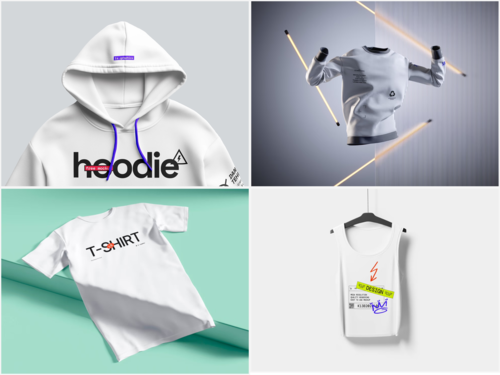
There’s a particular kind of electricity that runs through streetwear culture right before a drop. A blurry teaser image. A cryptic caption. A single product shot that somehow says everything and nothing at once. Behind that carefully engineered anticipation? More often than not, an apparel mockup.
The Hype Economy Runs on Visuals
Streetwear has always been as much about storytelling as it is about clothing. Brands like Supreme, Off-White, and Palace didn’t build cult followings by accident — they understood that desire is constructed visually, long before anyone touches the actual fabric.
Modern drops are announced days or weeks in advance. Social media teasers, email blasts, and Discord leaks all build pressure. But the product itself often isn’t ready for a traditional photoshoot at that stage. Samples may still be in production. Colorways are being finalized. That’s exactly where mockups enter the equation — allowing brands to present polished, photorealistic visuals without a single garment being physically available.
From Underground to Industry Standard
What started as a workaround has become a deliberate creative strategy. Independent streetwear labels quickly realized that a well-executed apparel mockup could generate just as much excitement as an editorial shoot — sometimes more, because the clean, focused aesthetic speaks directly to the product without distraction.
The logic is simple: streetwear audiences are visually sophisticated. They notice quality. A crisp, well-lit mockup on a minimal background communicates confidence in the product. It says: we don’t need gimmicks.
Real-World Use: How Brands Actually Do It
Here’s where theory meets practice. Several well-documented examples show how mockups are embedded into real brand workflows:
- Supreme’s social teasers often feature flat or ghost-style product presentations days before a Thursday drop. The clean compositions create urgency without revealing every detail — fans screenshot and share them obsessively, multiplying reach organically.
- Emerging labels on Instagram routinely use mockup templates to test audience response before committing to full production runs. If a design gets traction as a mockup post, it’s a green light to manufacture. If it doesn’t, the brand pivots — saving thousands in wasted inventory.
- Limited-edition collaborations between artists and streetwear imprints are almost always teased with mockup-based visuals. The artwork is shown on a hoodie or tee in a controlled, beautiful rendering that preserves the integrity of the design better than rushed photography ever could.
- Crowdfunding and pre-order campaigns on platforms like Kickstarter or Shopify use mockups as the primary visual throughout the entire campaign, sometimes never producing a photoshoot until after funding goals are met.
This is not corner-cutting — it’s smart, iterative design culture.
Apparel Mockups on ls.graphics
ls.graphics offers a professional-grade library of apparel mockups built for exactly this kind of work. Their scenes feature ultra-realistic rendering with carefully organized layers, making customization intuitive even for non-designers. Multiple angles and color styles are available per item, giving brands full flexibility across campaigns. The compositions are stylish and minimalistic — the kind that look native on Instagram without any extra editing. The Edit Online feature lets users apply designs directly in the browser, no software required. There’s also a generous collection of free scenes to explore before committing, making it accessible to independent creators and established labels alike.
The Psychology of the Teaser
Mockups do something photography rarely can at the pre-production stage: they let a brand control every visual variable. That level of control isn’t just aesthetic — it’s deeply psychological. When a brand drops a perfectly composed mockup, it triggers a specific set of responses in the viewer’s mind:
- Scarcity signals — a clean, isolated product image implies exclusivity. There’s no lifestyle noise, no model, no context. Just the thing itself, presented like it matters.
- Projection space — without a body or environment to anchor the piece, viewers mentally place themselves in it. Mockups invite imagination in a way that styled photography often doesn’t.
- Perceived legitimacy — a polished visual cues professionalism. Even an unknown brand with a strong mockup presentation reads as credible and intentional.
- Shareability — minimal, high-contrast mockup images perform exceptionally well as screenshots and reposts, which is exactly how hype spreads peer-to-peer on Reddit, Twitter, and Discord.
When a consumer sees a familiar visual style across multiple drops, it signals that a brand has a coherent identity. Consistency in mockup aesthetics builds the same recognition as a logo or colorway — and in streetwear, that kind of silent fluency is everything. A well-timed mockup teaser doesn’t just show a product; it trains an audience to anticipate what comes next.
Conclusion
The gap between a great idea and a sellable product used to be measured in months of production and photography. Mockups have collapsed that timeline — and in the hands of a smart streetwear brand, they’ve become the drop itself. The teaser is the moment. The visual is the statement.
Whether you’re an independent designer testing your first graphic tee or a growing label preparing a multi-SKU seasonal release, the tools available today make professional presentation genuinely accessible. Platforms like ls.graphics are a big part of why that’s true — putting studio-quality presentation within reach of anyone with a vision worth sharing.